What Really Changes in the ArchiMate® 4 Specification and What Does Not

What Really Changes in the ArchiMate® 4 Specification and What Does Not

August 20, 2026 - Marc Lankhorst - Enterprise Architecture

TL;DR:

Marc Lankhorst, Managing Consultant & Chief Technology Evangelist at Bizzdesign, has managed the development of the ArchiMate modeling language since its inception more than 20 years ago. Here, he explains what the language’s first major update in a decade changes, what remains familiar, and why the ArchiMate® 4 Specification matters for practitioners.

If you work in enterprise architecture, you probably already know that The Open Group published the ArchiMate® 4 Specification, which defines the first major update to the modeling language in a decade. For practitioners, that naturally raises three questions. What has changed? What remains familiar? And why should I care?  

The last major release of the ArchiMate modeling language was Version 3 in 2016. Versions 3.1 (2019) and 3.2 (2022) followed, bringing relatively limited improvements. Version 4 goes much further.

FAQs

Compared with Version 3.2, the ArchiMate 4 Specification reduces the number of concepts in the language by 30%, from 60 to 42. The main structural change is the merging of behavior concepts previously divided across the Business, Application, and Technology layers into a single set in the Common Domain. Version 4 also replaces layers with domains, introduces a new depiction of the ArchiMate Framework, generalizes concepts such as Role and Collaboration, removes several specialized concepts, and introduces relationship multiplicity. 

The Open Group introduced the ArchiMate 4 Specification to make the language easier to learn and use while giving practitioners greater modeling freedom. The Specification removes overlapping or rarely used concepts, avoids forcing architects to classify behavior as business, application, or technology too early, and makes it easier to represent processes involving people and machines. 

Yes. The final ArchiMate 4 Specification removes seven concepts from Version 3.2. Business Interaction, Application Interaction, and Technology Interaction can be represented using Process and the relevant participants. Representation can be modeled using Material for paper or Data Object and Artifact for digital representations. Contract can be represented as a Business Object, Constraint as a Requirement, and Gap as an Assessment of the difference between two architecture states represented by Plateaus. For more detail, see the final ArchiMate 4® Specification and the accompanying motivation white paper by Marc Lankhorst and Jean-Baptiste Sarrodie, which explains the rationale and available conversion options.uses the term “removed”. 

The familiar Business, Application, and Technology divisions remain, but the ArchiMate 4 Specification calls them domains rather than layers. Shared concepts that apply across these domains, including Process, are part of the Common Domain. This makes clear that the Business, Application, and Technology Domains represent different parts of the language rather than abstraction levels or a strict hierarchy in which business is served by applications and applications are served by infrastructure.

No. Existing ArchiMate 3.2 practitioners do not need to relearn the language from scratch. They need to understand the streamlined vocabulary of the ArchiMate 4 Specification, the move from layers to domains, and the new modeling options, but Version 4 retains the language’s underlying structure, core purpose, expressive power, and key design principles. 


Bizzdesign Connect North America 2026
Bizzdesign Connect North America

September 17, 2026

9:30AM CDT / 10:30AM EDT 

Virtual Event

Register Now!
See the agenda
Info-Tech Research Group
Chief Architect Network

Where AI Meets the Moment of Decision

Enterprise Architecture is becoming more strategic, more intelligent, and more central to how organizations operate. The question is whether yours is keeping pace.

By the time enterprise context enters the conversation, the window to influence direction has already closed. Priorities are locked in. Investments have moved. Risks are no longer hypothetical.

What are the biggest challenges to achieving ROI from AI?

Discover 4 Steps to Improve AI ROI and Governance.

2025 Gartner® Critical Capabilities for Enterprise Architecture Tools

2025 Gartner® Critical Capabilities for Enterprise Architecture Tools

Gartner®  Report
See how Bizzdesign is represented in Gartner’s assessment of enterprise architecture tool capabilities
2025 Gartner Critical Capabilities for Enterprise Architecture Tools

Enterprise architecture tools enable organizations to envision, model, and plan their future across evolving business, operating, and technology models. As transformation grows more complex and AI becomes a key capability, this report evaluates vendors across five key enterprise architecture use cases to reflect what buyers need to align strategy, execution, and outcomes.

Access the report

CAPTCHA

What we believe sets Bizzdesign apart

This report provides a comprehensive evaluation of enterprise architecture tools, analyzing vendor performance across five critical use cases and highlighting strengths in strategy alignment, governance, and solution architecture delivery. It delivers insights into vendor positioning, product differentiation, and AI-driven capabilities, helping enterprise architecture teams select platforms that support transformation and better align strategy, execution, and business outcomes.

In our opinion, the report reflects the breadth of Bizzdesign’s offering, with three Bizzdesign products assessed across all five Gartner enterprise architecture use cases. In addition, Bizzdesign ranked among the three highest vendors for Bizzdesign (Horizzon) in every use-case evaluation, including #1 for Solution Architecture Design and Delivery.


Gartner®, Critical Capabilities for Enterprise Architecture Tools, By Andrei Razvan Sachelarescu, Austin Steinmetz, Fred Ganter, Andrew Gianni, 7 October 2025. Gartner is a trademark of Gartner, Inc. and/or its affiliates.

Gartner does not endorse any vendor, product or service depicted in its research publications and does not advise technology users to select only those vendors with the highest ratings or other designation. Gartner research publications consist of the opinions of Gartner’s research organization and should not be construed as statements of fact. Gartner disclaims all warranties, expressed or implied, with respect to this research, including any warranties of merchantability or fitness for a particular purpose.

Confirmation | Bizzdesign Circle Event - Toronto

Confirmation | Bizzdesign Circle Event - Toronto

Thank you for registering for our Bizzdesign Circle Event in Toronto!

Your registration is confirmed. You’ll receive an email shortly with all event details.

See you in Canada, 

The Bizzdesign Team


Confirmation | Bizzdesign Circle Event - Montreal

Confirmation | Bizzdesign Circle Event - Montreal

Thank you for registering for our Bizzdesign Circle Event in Montreal!

Your registration is confirmed. You’ll receive an email shortly with all event details.

See you in Canada,

The Bizzdesign Team


Conferma | Webinar ArchiMate®

Conferma | Webinar ArchiMate®

Grazie per esserti registrato al nostro webinar “ArchiMate®: da mappatura a vera guida della trasformazione aziendale”.

Riceverai a breve via e-mail tutti i dettagli su come partecipare alla sessione. Per qualsiasi domanda o necessità, puoi contattare j.ferron@bizzdesign.com.

A presto,

Il team Bizzdesign


Solution Architecture Management

Solution Architecture Management

Design Smarter, Deliver Faster
With Solution Architecture Management

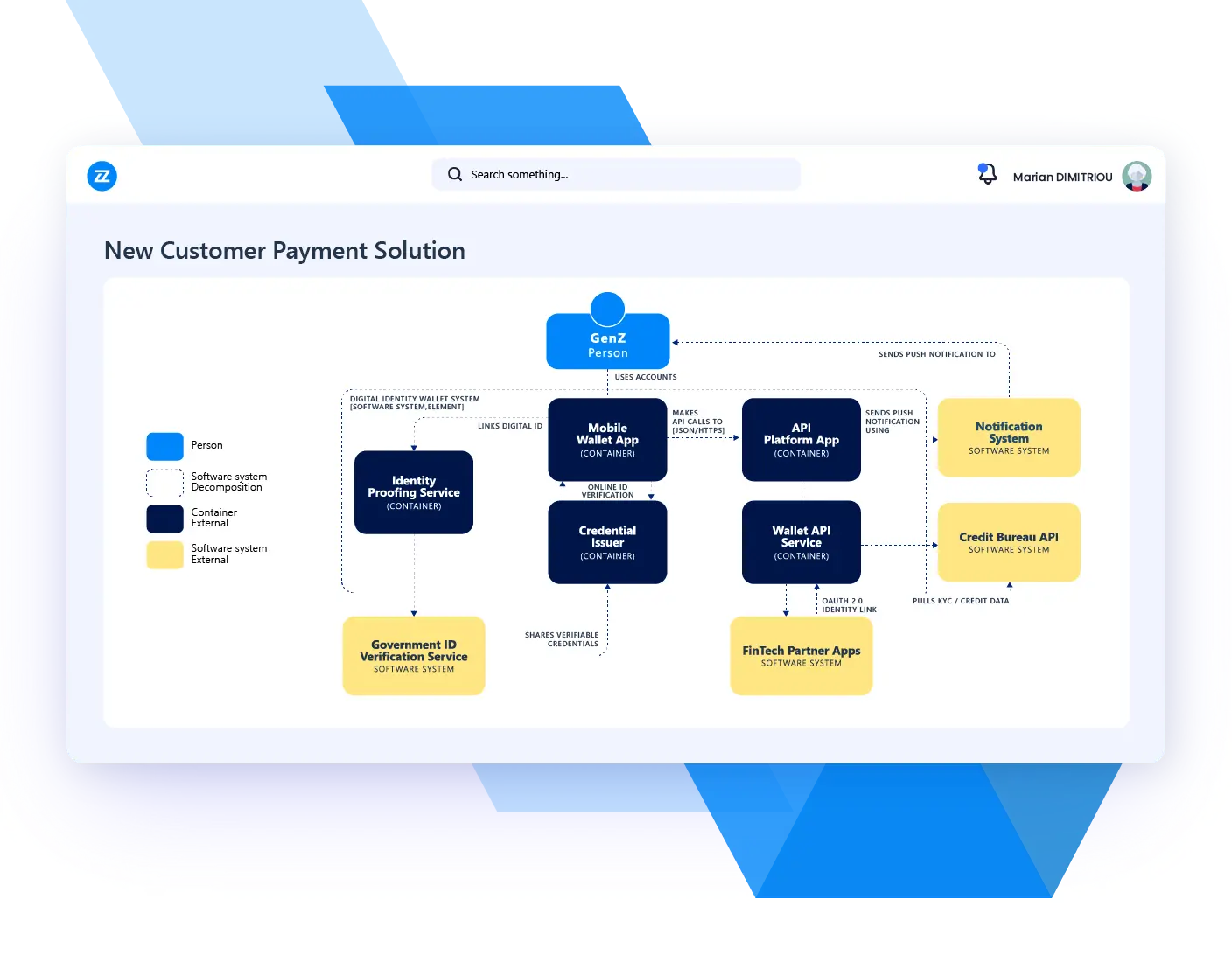
Design Purpose-Built Solutions That Scale

From AI to cloud, mobile to security, and CX –– build faster, launch smarter, and deliver solutions at the speed and quality your business demands.

Fit-for-Purpose Solutions. Faster Delivery.

  • Accelerate design with business context and reusable content.
  • Ensure quality and alignment with templates and automated governance.
  • Keep solutions in sync with business goals, principles, and standards.
solution architecture management use case solution architecture design

Solution Architecture Design

Shift Left to Deliver Winning Solutions Faster

  • Create designs that support decision-making and execution.
  • Evaluate options and scenarios by cost, risk, and speed to choose the best fit.
  • Build roadmaps that guide efficient, effective implementation.
solution architecture management use case reference architecture management

Reference Architecture Management

Automate Architecture Design Governance

  • Define reference architectures to standardize proven patterns across teams.
  • Maintain libraries to enforce consistency and best-practice design.
  • Enable autonomous design across teams with reusable, compliant components.
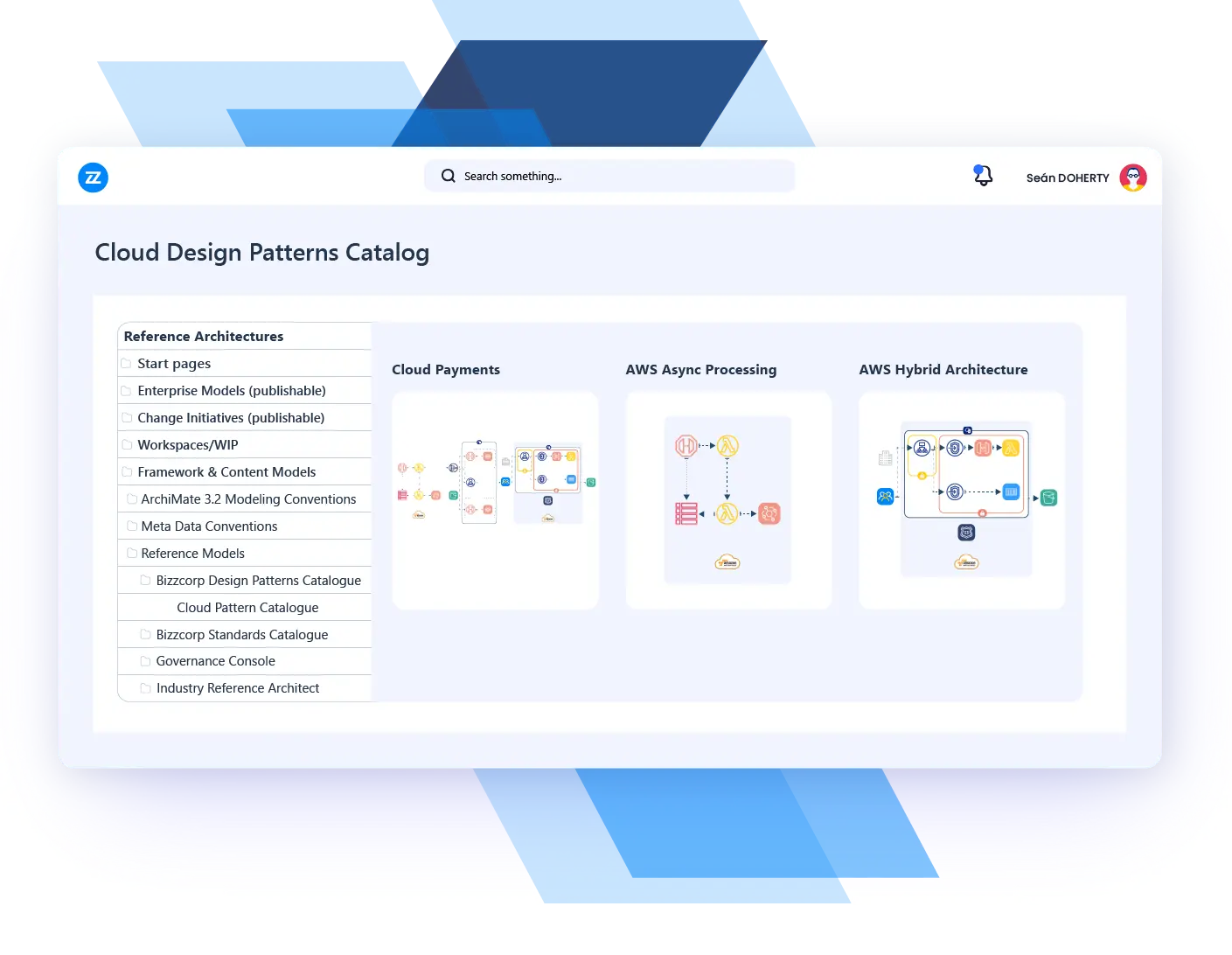
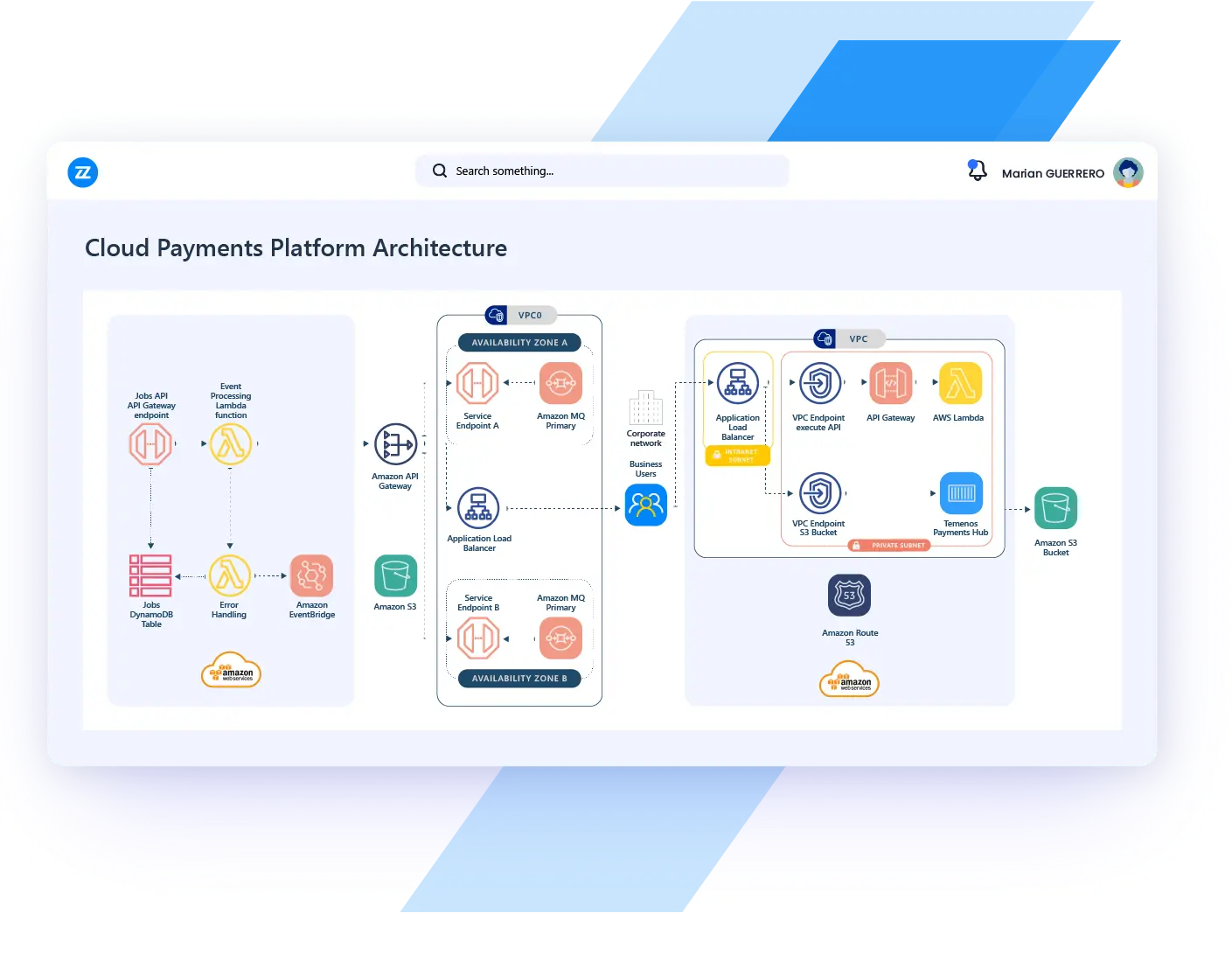
solution architecture management use case cloud architecture

Cloud Architecture

Continuously Adapt and Optimize Your Cloud Architecture

  • Analyze your cloud architecture landscape to guide smarter design.
  • Create secure, scalable cloud solutions with approved architecture patterns.
  • Align transformation roadmaps with business strategy and cloud architecture.
 
Accelerate Delivery With Smarter Solution Design

Standardize, govern, and optimize architecture to deliver solutions faster –– aligned with business goals and built to scale.

Architect Your Change with Clarity: Why Design Must Be Central to Your Enterprise Transformation 

Architect Your Change with Clarity: Why Design Must Be Central to Your Enterprise Transformation 
Enterprise transformation places sustained demands on how organizations make decisions and coordinate change. Strategic direction may feel clear at the outset, yet execution often introduces friction as initiatives progress across portfolios, teams, and governance forums. Decisions taken in one area shape constraints elsewhere, sometimes without leaders seeing the full impact until late in delivery. 

FAQs

Design-led transformation treats enterprise change as a deliberate design discipline rather than a series of isolated projects. It means modeling decisions, mapping dependencies, and making trade-offs visible before execution begins. Organizations work from a shared, governed view of their enterprise so strategy stays coherent as it moves into delivery. 

Enterprise architecture management creates a living, queryable model that connects business capabilities to the applications, data, technologies, processes, and organizational structures that enable them. Most organizations have accumulated layers of applications, data, and infrastructure over decades; the challenge is turning that landscape into coherent architecture that leaders and teams can actually use to make decisions. 

A managed enterprise architecture makes visible how applications support business capabilities, how data flows across systems, where technical debt has accumulated, and which dependencies will constrain future change. This visibility allows leaders to assess impact before committing resources, helps teams identify reuse opportunities and avoid duplication, and provides a shared language for business and IT to collaborate on transformation decisions. 

Business architecture management creates a capability-based view of the enterprise that anchors transformation in how value is created and delivered. It shows which capabilities support strategic objectives, which constrain progress, and where targeted change will have the greatest impact. 

This view becomes the foundation for prioritizing investments and sequencing initiatives based on capability gaps and overlaps rather than isolated business cases. When business and IT work from a shared frame of reference, collaboration improves and transformation stays connected to business outcomes rather than drifting toward technical outputs. 

Solution architecture management translates strategic intent into executable initiatives by providing reusable design patterns, reference architectures, and governance guardrails. Without it, initiatives often start from scratch, reinventing design patterns and making localized technology choices that drift from enterprise standards. 

When solution architecture is managed consistently, teams work with proven templates that guide delivery without constraining execution. Solutions stay aligned with architectural principles, comply with standards, and integrate with existing systems in ways that reduce long-term complexity. 

Business process management embeds designed change into day-to-day operations by making visible how work flows across the organization, how risk accumulates, and how customer and employee experiences are affected as transformation progresses. 

By modeling, analyzing, and optimizing business processes, organizations can identify bottlenecks, eliminate waste, and ensure compliance with regulatory and internal standards. When processes are documented, measured, and governed, teams can improve performance based on evidence rather than intuition and ensure new ways of working take hold across the enterprise. 


Ready to Design Transformation With Clarity?

Let's talk about your transformation goals and how our end-to-end suite can support you.